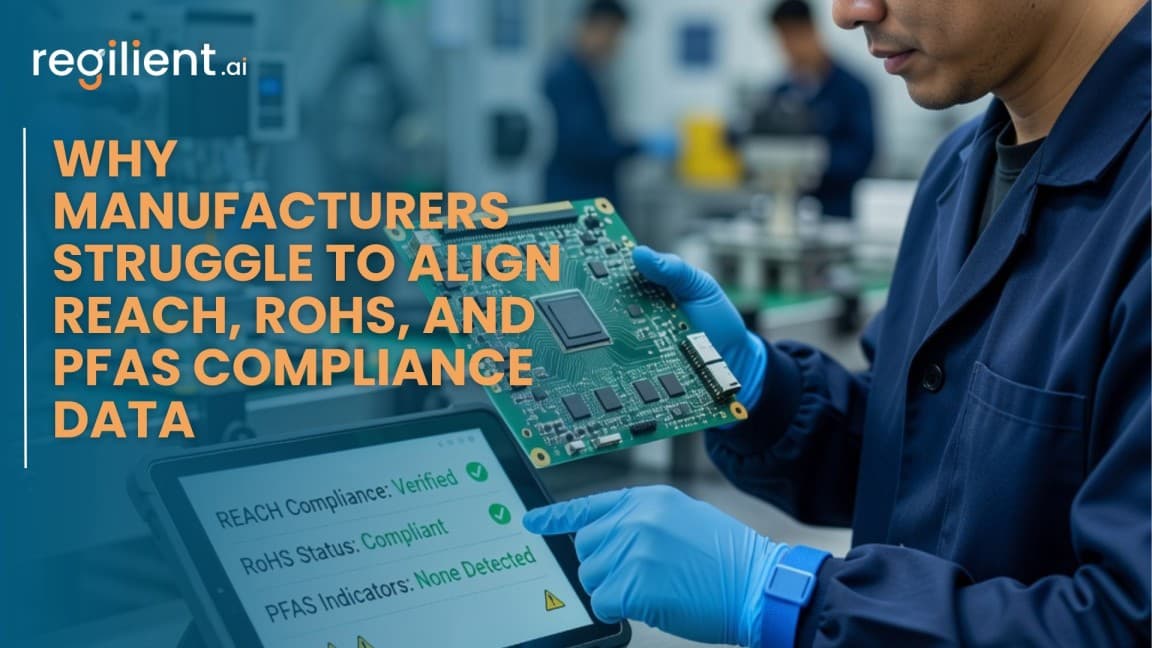
RoHS Compliance, REACH Compliance, PFAS Compliance
Updated

Key areas of REACH Compliance
Explore the main topics, practical questions and resources connected with this category.
Identify the role of the substance, mixture or article in the supply chain.
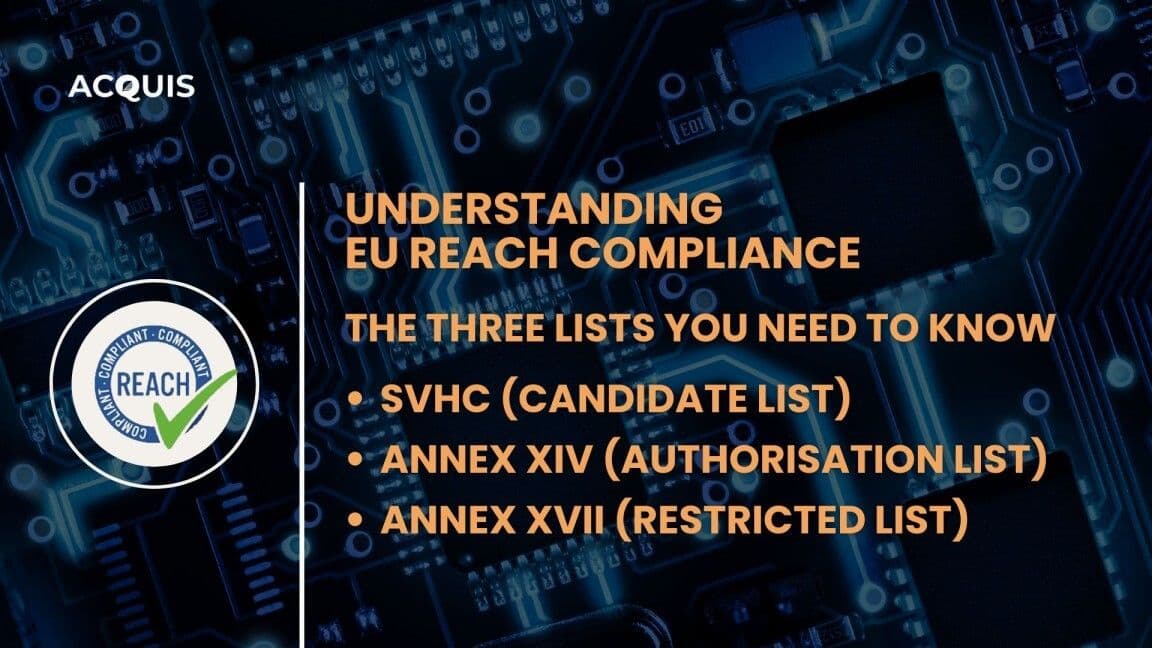
Screen relevant material information against the Candidate List and applicable thresholds.
Assess communication duties for articles containing Candidate List substances.
Check restrictions and authorisation requirements for relevant uses.
Request sufficient substance and article information from suppliers.
Track list updates, decisions and evidence supporting assessments.
KNOWLEDGE AND RESOURCES
Browse explainers, practical guides, industry insights and related articles to build a clearer understanding of this topic.
Updated
Updated

Updated
Updated
Updated


Updated


Updated

Updated


The information provided in Regilient's blogs, ebooks, and other materials is intended for informational purposes only and should not be construed as legal advice. While we strive to provide accurate and up-to-date information, the rapidly evolving nature of compliance regulations means that the content may not always reflect the most current legal standards or interpretations. Therefore, it is crucial to consult with qualified legal professionals or our experts to ensure compliance with specific regulations and requirements applicable to your business. Reliance on the information provided without seeking professional advice could result in legal risks and potential non-compliance. Regilient disclaims any liability for errors, omissions, or damages arising from the use of the information provided in our materials.