
Key Capabilities

- 1Risk questionnaires with geo/product/tier signals
- 2Document intake for policies, audits, CAPA, and traceability
- 3UFLPA trade-lane documentation packs and holds
- 4Escalation playbooks: enhanced DD, blocks, notifications
- 5Board dashboards, metrics, and annual statement exports
How It Works

Segment suppliers; set cadence and owners.

Launch assessments with mandatory fields and deadlines.

Collect evidence; verify completeness and authenticity.

Score risk; auto-trigger escalations and track CAPA to closure.

Export statements and regulator/customer-ready audit packs.
Operational Benefits
Proof-on-demand replaces scramble-before-audits.
Objective risk scores replace subjective judgments.
Program-level visibility for legal, sourcing, and executives.
STRT Implementation & Advisory Services

Implementation (3-6 weeks)
- Risk model configuration (geo, product, tier)
- Assessment templates & document intake
- Escalation workflows and holds
- Dashboards, reports, and training
Outcome:
Live assessments and evidence intake with audit-ready logs.

Advisory (Quarterly)
- Policy updates & benchmarking
- Third-party audit coordination
- Annual statement review
Outcome:
Fewer surprises; faster responses to customers and regulators.

Managed Service (MSP)
- Supplier outreach at scale
- Evidence QA & verification
- CAPA follow-through and reporting packs
- SLA: initial triage in 2 business days
Outcome:
Enterprise-grade compliance without extra headcount.
Policy-Only vs Operational Program
| Process Area | Manual (Spreadsheets) | Software (Regilient) |
|---|---|---|
| Supplier Coverage | Static, annual | Risk-based cadence with tiers & geo signals |
| Evidence | Pooled PDFs | Versioned, validated, immutable records |
| Risk Management | Subjective | Scored with thresholds and triggers |
| Escalations | Ad-hoc emails | Playbooks: EDD, holds, notifications |
| Audit Readiness | Last-minute scramble | One-click statements & audit packs |
Typical Roles & Actions
| Role | Typical Actions (examples) |
|---|---|
| Sourcing | Launch assessments; monitor SLAs; enforce holds on non-responses |
| Compliance/Legal | Review evidence; set risk thresholds; approve escalations |
| Program/Quality | Coordinate CAPA; verify closure; report to executives |
Always align with current customer/retailer instructions and legal counsel for jurisdiction-specific wording.
Compliance Checklist
- Define risk model and scope
- Launch assessments and evidence intake
- Score risk and trigger playbooks
- Close CAPA; lock audit trail
- Publish annual statement
FAQs for Modern Slavery & Forced Labor Compliance
Which laws cover modern slavery and forced labor in supply chains?
What’s the difference between having a policy and running an operational program?
What is the UFLPA, and what happens if my goods are detained at the U.S. border?
How should I risk-score my suppliers for modern slavery?
What evidence do I need to collect from suppliers, and how do I validate it?
How does modern slavery compliance connect to CSRD, CSDDD, and conflict minerals?
Useful Responsible Sourcing Resources
Published:
Understanding the Obligations of the German Supply Chain Due Diligence Act (SCDDA)
Published:
UFLPA Compliance for Electronics Manufacturers: Trace Components, Materials & Suppliers
Published:
The Role of Traceability and Transparency in Responsible Sourcing for Conflict Minerals

Published:
ESRS Under CSRD: Scope, Materiality, Disclosures, Reporting and Audit Readiness
Published:
Latest Update to the Uyghur Forced Labor Prevention Act (UFLPA) Strategy
Published:
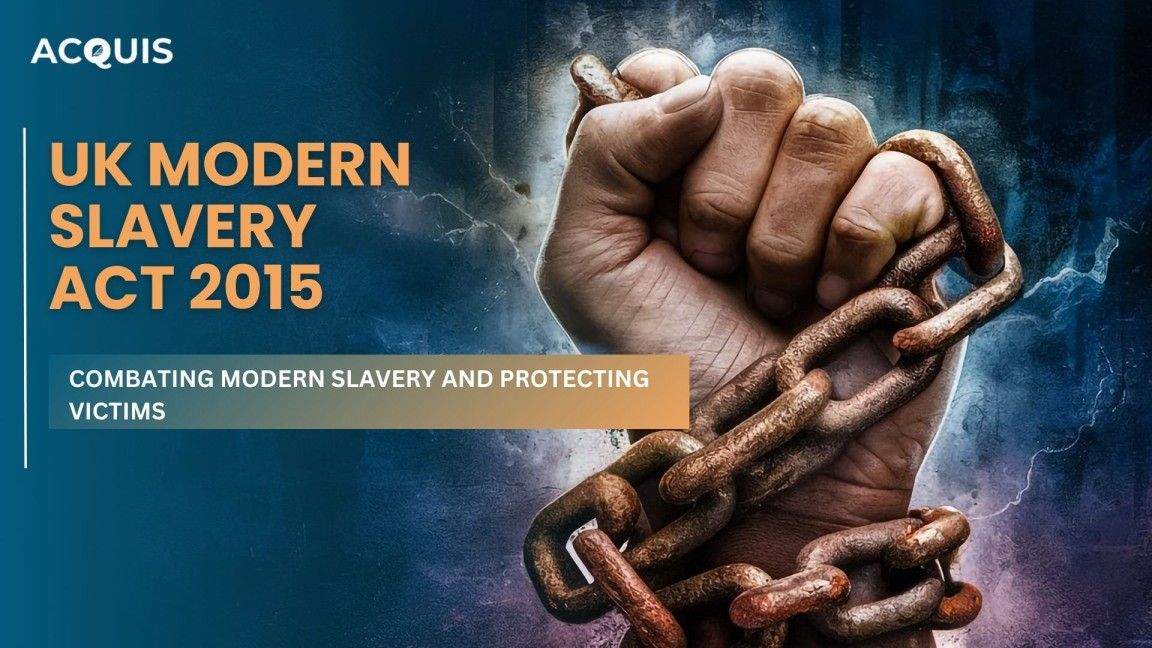
UK Modern Slavery Act 2015: A Comprehensive Legal Framework to Combat Modern Slavery
Related Compliance Solutions
Prove Your Program, Not Just Your Policy
Run a defensible modern slavery program with evidence, risk, and action—visible on demand.