
Table of Contents
- Why Supplier Engagement Matters
- Building a Supplier Engagement Strategy
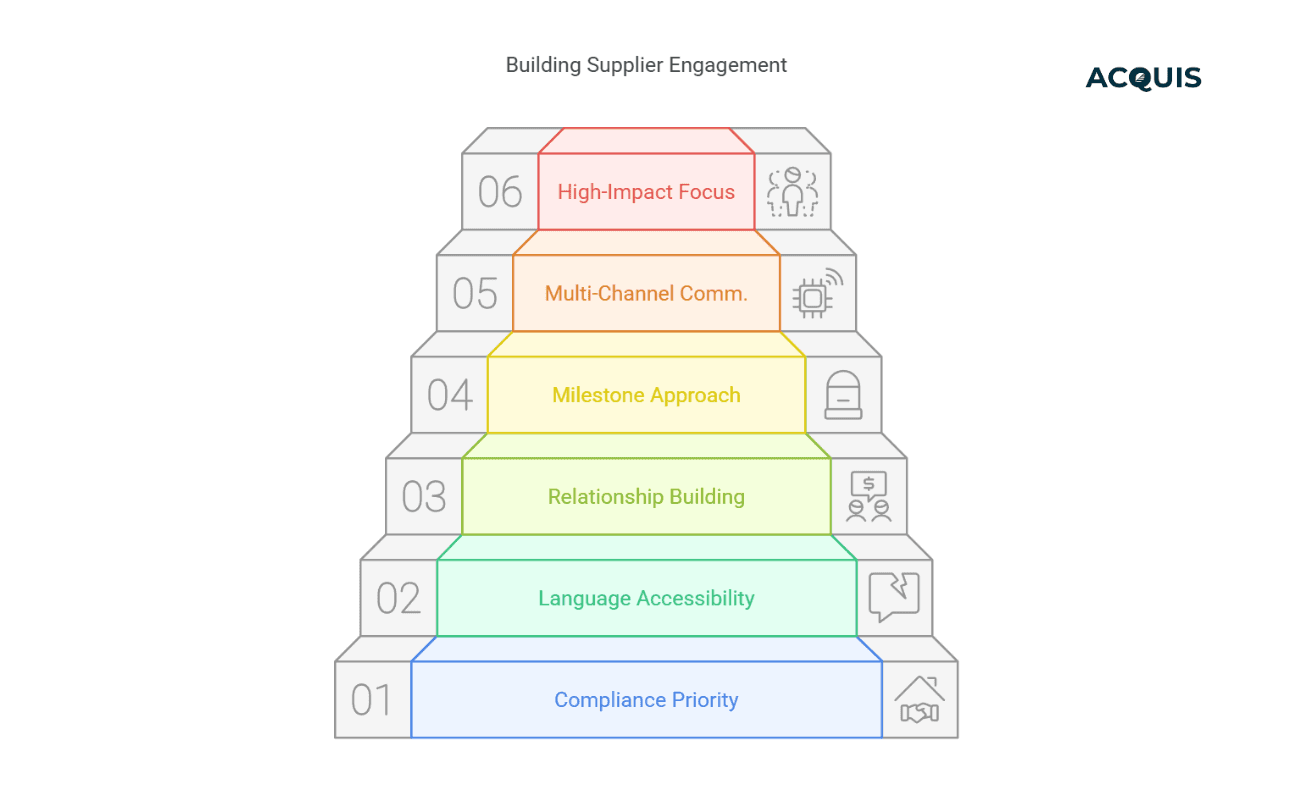
- 1. Make Compliance a Priority from Day One
- 2. Speak Their Language (Literally & Figuratively)
- 3. Build a Relationship, Not Just a Request List
- 4. Use a Milestone-Based Approach
- 5. Leverage Multi-Shift & Multi-Channel Communication
- 6. Prioritize High-Impact Suppliers Using the 80/20 Rule
- Overcoming Common Supplier Engagement Challenges
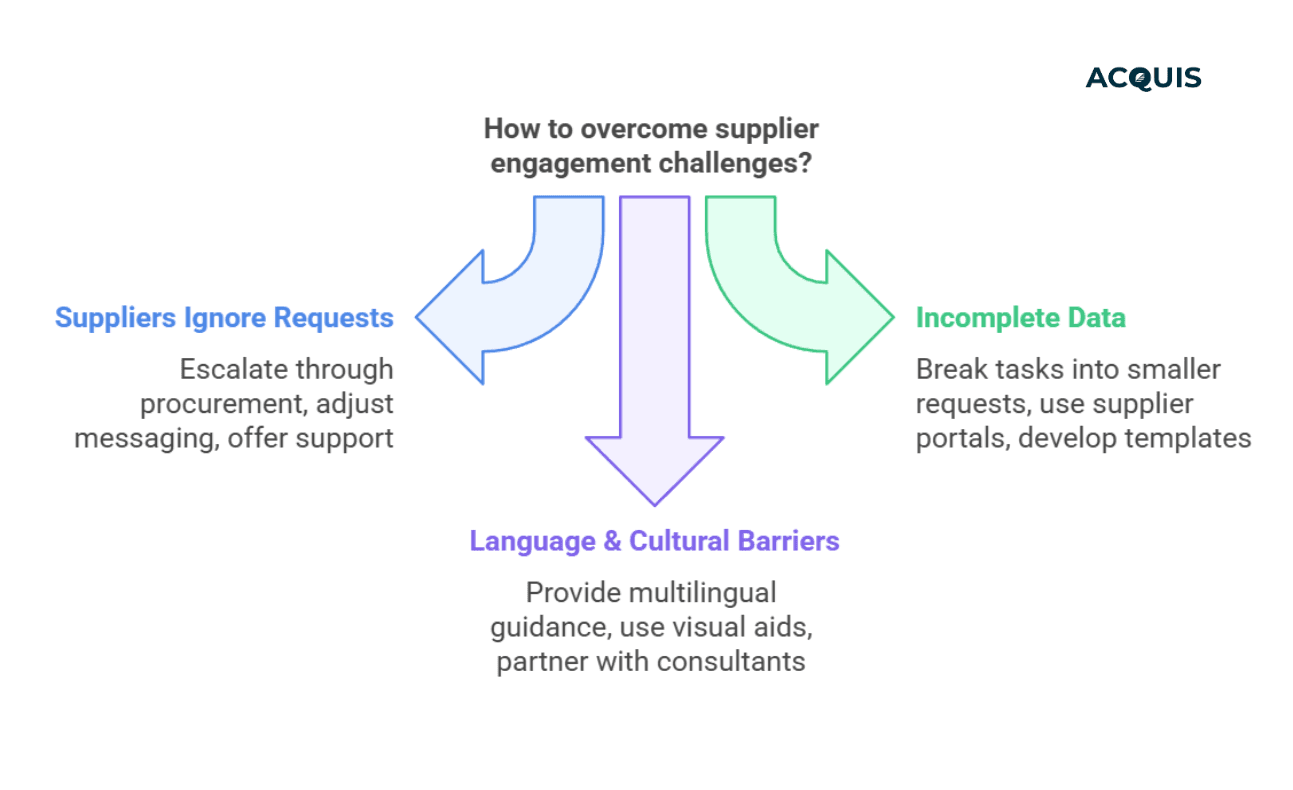
- Challenge 1: Suppliers Ignore Requests
- Challenge 2: Suppliers Provide Incomplete Data
- Challenge 3: Language & Cultural Barriers
- Turning the Strategy Into a Trackable Follow-Up Cadence
- Managing Contacts by Regulation, Not Just by Supplier
- The Future of Supplier Engagement: Collaboration Over Compliance Policing
Regulatory compliance is a team sport, and guess who the MVP is? Your suppliers.
If your suppliers aren’t actively engaged in providing compliance data, you’re stuck chasing documents, begging for responses, and constantly firefighting when audits roll around.
The companies that win at compliance are the ones that turn supplier engagement into a long-term partnership, not a one-time transaction. In this post, we’ll discuss how to maximize supplier engagement, reduce friction in data collection, and make compliance a collaborative effort rather than a constant battle.
Why Supplier Engagement Matters
Many companies assume that compliance is their problem. But the reality is, your suppliers hold the key to your compliance success.
Here’s why engagement is crucial:
- Faster Response Times: The more engaged your suppliers are, the quicker you get the compliance data you need.
- Higher Data Accuracy: Suppliers who understand the importance of compliance provide better, more complete data.
- Stronger Supply Chain Relationships: A compliance-first culture fosters trust and long-term collaboration.
- Reduced Compliance Costs: When suppliers proactively provide the right data, it reduces the need for costly lab testing or last-minute regulatory fixes.
The bottom line? Engaged suppliers make compliance easier.
Building a Supplier Engagement Strategy
The key to engagement isn’t sending more emails. It’s about building relationships and incentivizing participation. Here’s how:
1. Make Compliance a Priority from Day One
The best time to establish compliance expectations? Before a contract is signed.
- Include compliance obligations in supplier agreements.
- Set clear expectations for data submission timelines.
- Require suppliers to designate a compliance contact in their organization.
When suppliers know compliance is a condition of doing business, engagement becomes automatic.
2. Speak Their Language (Literally & Figuratively)
A major barrier to supplier engagement is language and complexity.
- Offer multi-language support for global suppliers.
- Provide clear, simple guidance on what data is needed and why.
- Avoid compliance jargon. Break down requirements into actionable steps.
Suppliers are more likely to respond when compliance feels manageable, not overwhelming.
3. Build a Relationship, Not Just a Request List
If the only time suppliers hear from you is when you need a declaration, you’re doing it wrong.
- Hold compliance workshops to educate suppliers on regulatory trends.
- Recognize and reward top-performing suppliers.
- Assign a dedicated supplier liaison to maintain ongoing communication.
When suppliers feel valued and informed, they’re more likely to prioritize your requests.
4. Use a Milestone-Based Approach
Supplier engagement isn’t an all-or-nothing process. It’s a journey.
- Phase 1: Focus on critical, high-volume suppliers.
- Phase 2: Expand to smaller, but still essential, suppliers.
- Phase 3: Develop a strategy for onboarding new suppliers.
This approach prevents overwhelming your team while keeping momentum high.
5. Leverage Multi-Shift & Multi-Channel Communication
Global supply chains operate across different time zones and working styles.
- Use multi-shift teams to cover global suppliers efficiently.
- Mix emails, phone calls, and supplier portals for better response rates.
- Offer live support or chat options for real-time engagement.
The easier you make it for suppliers to communicate, the more engaged they’ll be.
6. Prioritize High-Impact Suppliers Using the 80/20 Rule
Not all suppliers contribute equally to your compliance burden.
- Identify the top 20% of suppliers that provide 80% of your materials.
- Focus engagement efforts where they will have the most impact.
- Develop an escalation process for high-risk, low-response suppliers.
By prioritizing strategically, you maximize effort while minimizing frustration.
Overcoming Common Supplier Engagement Challenges
Even the best strategies face hurdles. Here’s how to navigate common engagement roadblocks:
Challenge 1: Suppliers Ignore Requests
Solution:
- Escalate through procurement, if compliance is a business requirement, and make it clear.
- Adjust messaging. Make the request clear, direct, and action-oriented.
- Offer support and guidance, since sometimes suppliers need education, not pressure.
Challenge 2: Suppliers Provide Incomplete Data
Solution:
- Break requests into smaller, manageable tasks like reducing number of parts or regulations per request.
- Use supplier portals that validate data before submission.
- Develop standardized templates to reduce confusion.
Challenge 3: Language & Cultural Barriers
Solution:
- Provide compliance guidance in multiple languages.
- Use visual guides and flowcharts to simplify complex requirements.
- Partner with regional compliance consultants to bridge cultural gaps.
Turning the Strategy Into a Trackable Follow-Up Cadence
The approach above sets the right tone, but it still needs a concrete follow-up schedule behind it, or "escalate through procurement" becomes whoever remembers to chase it. A workable cadence looks like:
- Day 0: initial request sent, logged against the supplier and the specific regulation/template it covers.
- Day 10-14: automated reminder if no response, with no escalation yet.
- Day 21-30: first escalation, the designated compliance contact at the supplier, not just the original recipient, is looped in.
- Day 45: second escalation through procurement, following the "make it clear it's a business requirement" approach above, now with a paper trail showing two prior attempts.
The specific day counts matter less than having fixed ones. What makes this trackable rather than aspirational is a log of who was asked what, when, and what happened next, per supplier, per regulation, so a non-response doesn't just sit in someone's inbox until it's noticed.
Managing Contacts by Regulation, Not Just by Supplier
A single "compliance contact" per supplier works until that supplier has different people responsible for different regulations, which is common once a supplier works with RoHS, REACH, CMRT, and Prop 65 requests from different customers. Without a per-regulation contact record, requests default to whoever answered last time, which is often not the person who actually owns that specific declaration.
A more durable contact record tracks, per supplier: who owns RoHS/REACH substance declarations, who owns CMRT/conflict-minerals reporting, and who owns Prop 65 or other jurisdiction-specific requests, since these frequently sit with different teams even inside the same supplier organization. When a request goes to the wrong contact, that's usually why a supplier looks unresponsive when the actual problem is routing.
The Future of Supplier Engagement: Collaboration Over Compliance Policing
The companies leading the compliance game understand that supplier engagement isn’t about policing. It’s about partnering.
When compliance is a shared goal, everyone wins:
- Suppliers feel empowered, not pressured.
- Compliance teams spend less time chasing documents and more time managing strategy.
- Companies reduce compliance risk and cost.
So, ask yourself: are you building supplier relationships, or just collecting data?
Learn about Leveraging Automation in Compliance Managementbecause engagement is just the beginning. Smart companies don’t just collect data. They automate and analyze it for strategic advantage.