
Table of Contents
- What Is the Extended Minerals Reporting Template (EMRT)? 2025 Edition
- What Are Extended Minerals?
- Why Is Extended Mineral Mining a Problem?
- What Is the EMRT?
- What’s New in EMRT v2.0?
- Major Additions to EMRT:
- EMRT vs. CMRT: What’s the Difference?
- Why Does EMRT Matter?
- What’s Inside the EMRT?
- What changed with the EMRT in 2026?
- What’s Coming Next?
- Use Cases for EMRT Today
- Automate Your EMRT Due Diligence?
- Sources (checked 18 November 2026)
Last updated: 18 November 2026
In brief
The Extended Minerals Reporting Template (EMRT) is RMI's free template for collecting supplier data on cobalt, copper, natural graphite, lithium, mica and nickel, including the refiners and processors in the chain. It is voluntary, but battery due diligence rules in the EU apply from 18 August 2027. Regilient automates EMRT outreach and validation.
What Is the Extended Minerals Reporting Template (EMRT)? 2025 Edition
In a world increasingly driven by supply chain transparency, the Extended Minerals Reporting Template (EMRT) has become an essential tool for responsible sourcing.
Developed by the Responsible Minerals Initiative (RMI), the EMRT consolidates cobalt, mica—and now copper, lithium, natural graphite, and nickel—into a single due diligence format. It helps companies trace extended minerals, identify high-risk sourcing from conflict-affected areas, and meet growing environmental, social, and governance (ESG) expectations.
Let’s break it down.
What Are Extended Minerals?
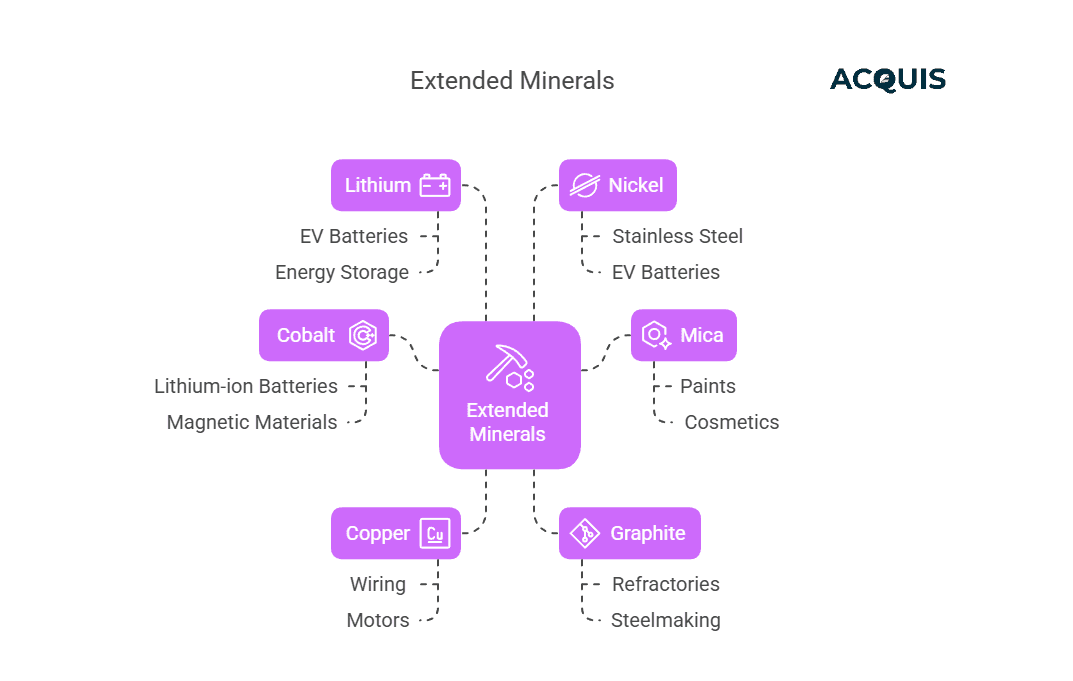
Extended minerals go beyond the classic “3TG” conflict minerals. These include:
- Cobalt – Critical for lithium-ion batteries
- Mica – Used in electronics, cosmetics, and paints
- Copper – Key conductor in electronics and EVs
- Natural Graphite – Crucial for steelmaking and energy storage
- Lithium – Powers EVs, phones, and energy grids
- Nickel – Found in stainless steel, batteries, and coins
These minerals are indispensable to modern technology—and frequently linked to child labor, modern slavery, and unsafe mining practices in conflict-affected and high-risk areas (CAHRAs).
Why Is Extended Mineral Mining a Problem?
Sourced from CAHRAs
Conflict-affected and high-risk areas (CAHRAs) are often controlled by armed groups and lack adequate labor protections. Mining in these zones perpetuates:
- Child labor (particularly in mica mines in India, Madagascar)
- Forced labor (notably in DRC’s cobalt mines)
- Unsafe working conditions
- Environmental degradation
Example: Cobalt in the DRC
- The Democratic Republic of Congo mined an estimated 73% of the world's cobalt in 2025, according to USGS figures reported by secondary sources. In the absence of safeguards:
- Workers (often children) are forced into toxic, hand-dug pits
- Lung damage, injuries, and fatalities are common
- Water and air pollution affect local communities
Limited Regulation, High ESG Risk
No law requires the EMRT by name, but the EU Batteries Regulation requires battery supply chain due diligence for raw materials such as cobalt, lithium and nickel from 18 August 2027. Stakeholder pressure from investors, NGOs and consumers is also pushing organisations to act now.
What Is the EMRT?
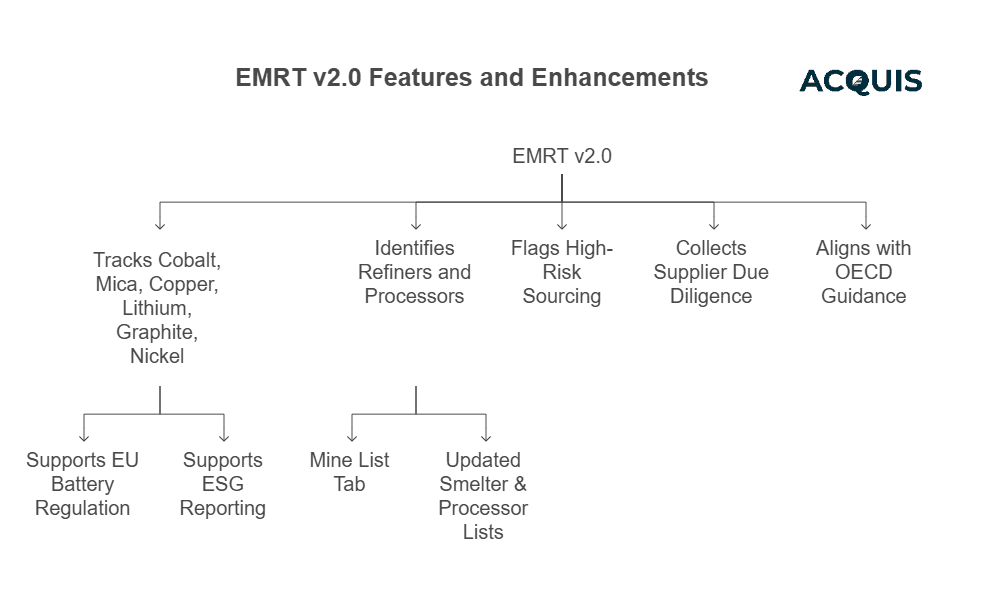
The Extended Minerals Reporting Template (EMRT) is a standardized Excel-based tool that:
- Tracks the use of cobalt, mica, copper, lithium, graphite, and nickel
- Identifies refiners and processors
- Flags high-risk sourcing from CAHRAs
- Collects supplier-level due diligence info
- Aligns with the OECD Due Diligence Guidance
Version note: this page first described EMRT 2.0, released in April 2025. RMI released updated CMRT and EMRT versions with functional changes on 17 April 2026, so confirm the latest version with RMI before you send it to suppliers. Vendor sources name the 2026 EMRT version as 2.11. Source: RMI.
What’s New in EMRT v2.0?
RMI expanded the scope to support EU Battery Regulation compliance and ESG reporting needs.
Major Additions to EMRT:
- 4 New Minerals**: Copper, Graphite (natural), Lithium, Nickel
- Mine List Tab: Optional mine-level transparency
- Updated Smelter & Processor Lists
This version merges the former Cobalt Reporting Template (CRT) and Mica Reporting Template (MRT)—and goes further.
EMRT vs. CMRT: What’s the Difference?
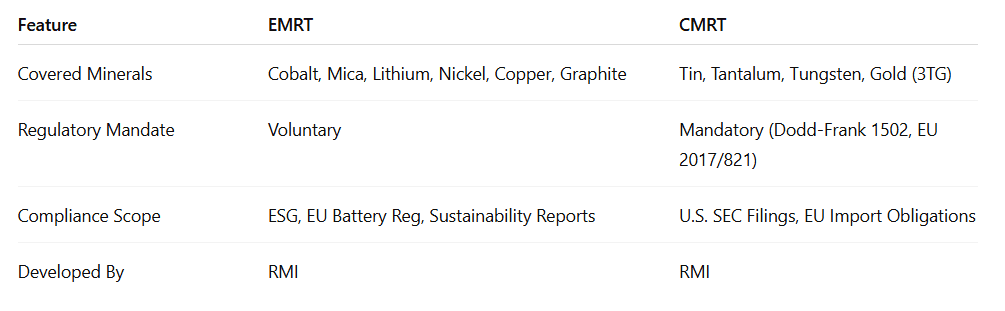
While CMRT supports legal reporting for conflict minerals, EMRT is the new ESG backbone for companies sourcing high-risk battery and electronics materials.
Why Does EMRT Matter?
Extended minerals are:
- Everywhere – Found in phones, EVs, laptops, medical devices
- Increasingly regulated – EU battery due diligence rules apply from 18 August 2027
- Ethically volatile – Major sourcing from CAHRAs
Companies can no longer say, “We didn’t know.” With EMRT, they don’t have to.
What’s Inside the EMRT?
The template includes:
- Supplier survey questions (use, CAHRA sourcing, recycled content)
- List of known cobalt and mica refiners/processors
- Mine origin questions
- Optional XML schema (digital submission)
Companies send EMRT to their suppliers, gather data, identify risk, and close gaps in sourcing.
What changed with the EMRT in 2026?
RMI's reporting templates are updated regularly, and the 2026 releases changed how suppliers should be asked for data.
New versions: RMI states that the latest versions of the CMRT and EMRT with functional changes were released on 17 April 2026, and that it re-released the templates without RMI logos and branding on 30 October 2026, described as functionally identical. The Additional Minerals Reporting Template (AMRT) received functional changes on 30 October 2026. Source: RMI.
Minerals covered: RMI lists the EMRT scope as cobalt, copper, natural graphite, lithium, natural mica and nickel. The AMRT lets the user choose other minerals, for up to ten. Source: RMI.
EU battery due diligence: Regulation (EU) 2025/1561 postponed the EU Batteries Regulation's supply chain due diligence obligations to 18 August 2027. Many customers ask for EMRT data as evidence of that due diligence. The postponement did not move the battery passport date.
For the 3TG side of the same programme, see our guide to the six steps to eliminate conflict minerals and how to build 3TG traceability. For the battery data side, see the EU battery passport. To automate collection, see our EMRT compliance software.
What’s Coming Next?
With the rise of:
- EU Battery Passports
- Digital Product Passport frameworks
- Mandatory ESG disclosure (CSRD, SEC ESG)
EMRT may become as essential as CMRT. The EU Batteries Regulation already requires battery supply chain due diligence from 18 August 2027 for raw materials such as cobalt, lithium and nickel, and the battery passport follows from 18 February 2027.
Use Cases for EMRT Today
- Investor ESG Reporting
- EU Battery Regulation Supplier Surveys
- Supply Chain Risk Screening
- Forced Labor & CAHRA Screening
Automate Your EMRT Due Diligence?
Manual outreach and spreadsheet chaos won’t cut it anymore.
- Automatically identify in-scope suppliers
- Send EMRT requests at scale
- Validate responses using AI + compliance rules
- Map refiners and CAHRAs
- Generate audit-ready reporting packages
Book a Live Demo to future-proof your extended minerals reporting process.
Don’t wait for laws to change. Use EMRT to lead on transparency. Extended minerals matter. Make your sourcing strategy match the moment.
Sources (checked 18 November 2026)
- Responsible Minerals Initiative, Minerals Reporting Templates introduction page, responsiblemineralsinitiative.org
- USGS Mineral Commodity Summaries 2026, cobalt chapter, as reported by secondary sources (see SME review)
- Regulation (EU) 2025/1561, via secondary summaries (see SME review)